
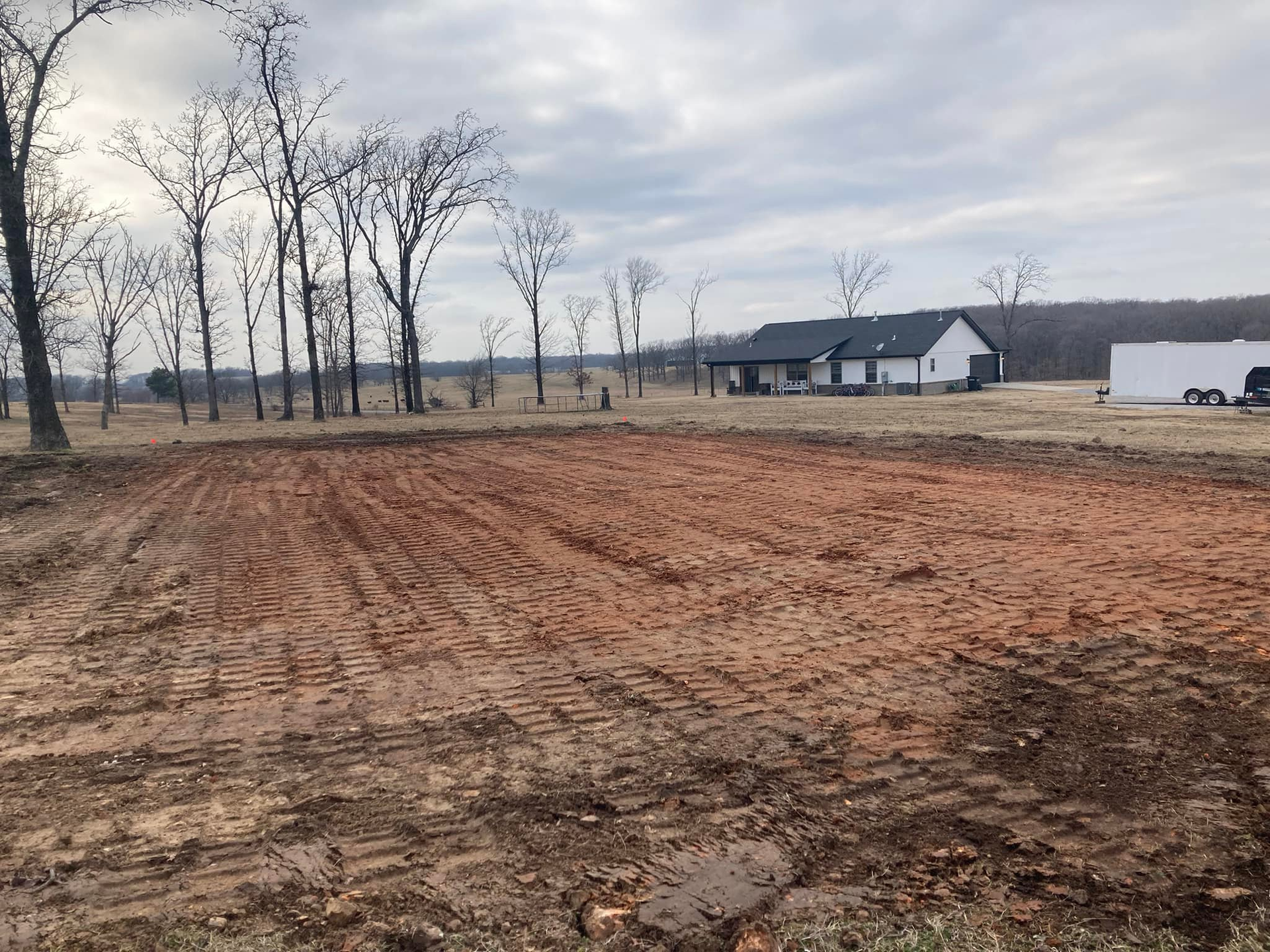
Set the Ground for Stable Construction
Dirt work across Northwest Arkansas, Northeast Oklahoma, and Southwest Missouri for sites that require precise grading and leveling before building or paving begins
L&L Land Management, LLC performs dirt work for residential and small commercial property owners across Northwest Arkansas, Northeast Oklahoma, and Southwest Missouri who need grading, leveling, and site preparation completed before construction can proceed. This service lays the groundwork for building pads, driveways, foundations, and other improvements by shaping the land to the correct grade and ensuring proper drainage. You receive a prepared site that meets the specifications required for the next phase of your project.
Dirt work involves moving, compacting, and shaping soil to create a stable surface that will not settle unevenly or allow water to pool. The process begins with a survey of the existing grade and identification of high and low spots that need adjustment. Soil is cut from elevated areas and filled into low sections, then compacted in layers to achieve the density and stability needed to support structures or paving. Proper compaction is critical because inadequately prepared ground will shift over time, leading to cracked foundations, uneven floors, and drainage failures.
If you are preparing a site for a new build, adding a garage or shop, or installing a driveway, a consultation will help clarify the grading requirements and timeline.
How Grading and Compaction Create a Stable Base
The work begins by stripping topsoil and organic material, which do not compact reliably and can cause settling if left in place. Heavy equipment is used to cut and fill the site to the target elevation, with slopes designed to direct water away from structures and toward drainage swales or culverts. Each layer of fill is compacted using a roller or plate compactor, and moisture content is monitored to ensure the soil reaches the required density.
When L&L Land Management finishes the dirt work, you will see a level, firm surface that matches the planned grade for your project. The ground will be stable enough to support the weight of building materials, concrete trucks, and construction equipment without rutting or sinking. Drainage will flow in the intended direction, reducing the risk of water intrusion or erosion during and after construction.
This service is often performed in conjunction with building pad preparation or driveway installation, but it can also be completed as a standalone task when land needs to be regraded for drainage correction or site access. Dirt work does not include utility trenching, foundation excavation, or paving, which are separate scopes handled by other trades or scheduled as follow-up phases.
What to Know Before Site Prep Begins
Property owners and builders need to understand how soil type, weather, and project sequencing affect grading outcomes and the readiness of the site for construction.
What is the difference between rough grading and finish grading?
Rough grading establishes the overall elevation and slope of the site, while finish grading fine-tunes the surface to exact specifications, typically just before paving or foundation work begins.
How does soil type in Northwest Arkansas, Northeast Oklahoma, or Southwest Missouri affect dirt work?
Clay-heavy soils are common in this area and require careful moisture management during compaction to avoid creating a slick, unstable base that will not hold its shape or support weight properly.
Why is compaction so important for building sites?
Uncompacted or poorly compacted soil will settle over time, causing foundations to crack, slabs to sink, and driveways to develop low spots that trap water and deteriorate quickly.
When should dirt work be completed relative to other trades?
Grading should be finished before any foundation, paving, or utility work begins, and it is best done during dry weather to allow proper compaction and avoid delays from muddy conditions.
How long does it take to complete dirt work for a typical residential site?
Most residential lots require one to three days depending on the amount of cut and fill needed, site access, and whether any rock or unsuitable material must be removed and replaced.
L&L Land Management will assess your site, review project plans, and provide an estimate based on the scope of grading and the condition of the existing ground. Contact the team to schedule a site visit and discuss your preparation needs.