
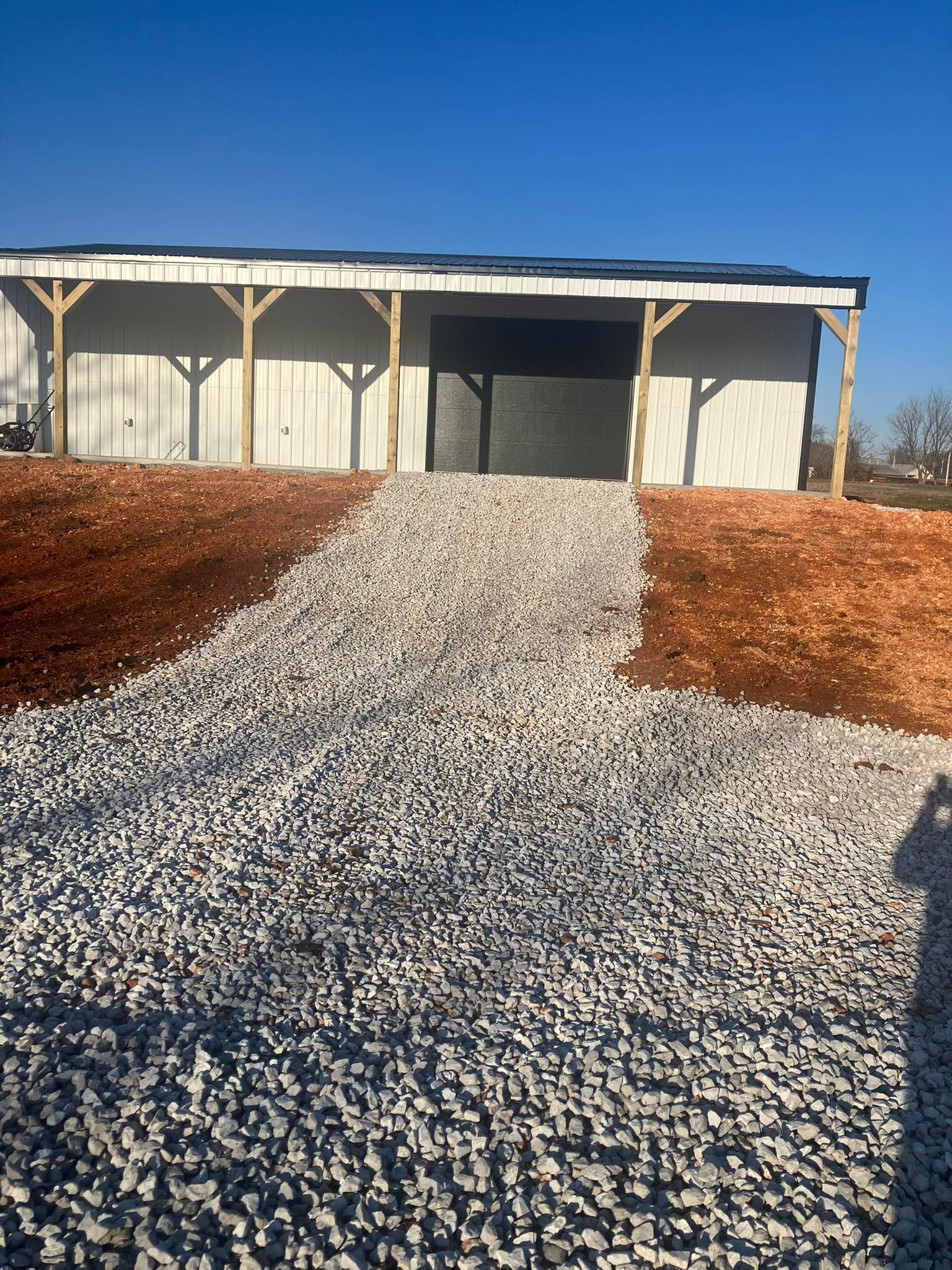
Build Access That Lasts Through Seasons
Driveway installation across Northwest Arkansas, Northeast Oklahoma, and Southwest Missouri for new construction sites and rural properties that lack reliable vehicle access
L&L Land Management, LLC installs driveways for residential and rural property owners across Northwest Arkansas, Northeast Oklahoma, and Southwest Missouri who need durable vehicle access to homes, outbuildings, or undeveloped land. This service includes grading, leveling, and preparing a stable base that supports daily traffic and handles drainage properly. You receive a finished driveway designed to hold up under use and weather without rutting or washout.
The installation process starts with site evaluation to determine the best route, slope, and drainage strategy. The existing ground is graded to establish a stable foundation, and base material is spread and compacted to create a surface that resists settling. Proper drainage is critical in Northwest Arkansas, where heavy rain can quickly erode poorly designed access routes. The driveway is shaped to shed water away from the center and toward designated runoff areas to prevent pooling and erosion.
If you are building a new home, upgrading an old path, or opening access to a back portion of your property, a site visit will identify the most practical route and material requirements.
What the Installation Includes and What You Will Notice
Grading begins by removing topsoil and vegetation along the planned route, then shaping the subgrade to match the natural contour while maintaining a gentle slope for drainage. Base material, typically crushed rock or gravel, is delivered and spread in layers, then compacted with heavy equipment to create a firm surface. The thickness of the base depends on soil type, expected traffic, and whether the driveway will support delivery trucks or farm equipment.
After L&L Land Management completes the work, you will have a level, compacted driveway that is immediately usable. The surface will be smooth enough for cars and trucks without causing damage to undercarriages, and water will drain off the edges rather than pooling in the center. Over time, the base will settle slightly, but proper compaction during installation minimizes future maintenance and extends the life of the driveway.
This service is suited to driveways ranging from short residential approaches to longer rural lanes that connect homes to county roads. It does not include paving, concrete work, or decorative finishes, which are separate trades. If your project requires culvert installation or significant cut-and-fill work, those needs are addressed during planning and may extend the timeline.
Answers to Practical Questions About Driveway Work
Homeowners and landowners want to know what materials are used, how long the work takes, and what conditions are necessary to start and complete the installation.
What type of base material is used for driveways in Northwest Arkansas, Northeast Oklahoma, or Southwest Missouri?
Crushed limestone or gravel is typically used because it compacts well, drains effectively, and is widely available in Northwest Arkansas, providing a stable base that handles both light and moderate traffic.
How thick does the base need to be?
Most residential driveways require a compacted base of four to six inches, but properties with clay subsoil or heavy vehicle use may need eight inches or more to prevent rutting and maintain stability.
Why is drainage so important in this area?
This region receives frequent heavy rainfall, and without proper drainage design, driveways can develop ruts, washouts, and erosion channels that require costly repairs and make access unreliable during wet months.
When is the best time to install a driveway?
Late spring through early fall is ideal when the ground is dry and compaction is most effective, though installation can proceed in other seasons if soil conditions allow and weather permits uninterrupted work.
How soon can I drive on the driveway after installation?
You can use the driveway immediately after final compaction is complete, though it is best to avoid heavy loads for the first few days to allow the base to fully settle and bond.
L&L Land Management will evaluate your property, discuss routing options, and provide a quote based on length, width, and site conditions. Reach out to schedule a site visit and review your access needs.